Beyond Backend Development: Exploring System Design with ShopEase
Introduction
Building a backend application is not just about writing APIs and connecting databases. As an application grows, important questions start appearing:
How can the system handle increasing traffic?
What happens when a service becomes unavailable?
How should databases and caches be used?
How do different services communicate?
How can we maintain data consistency?
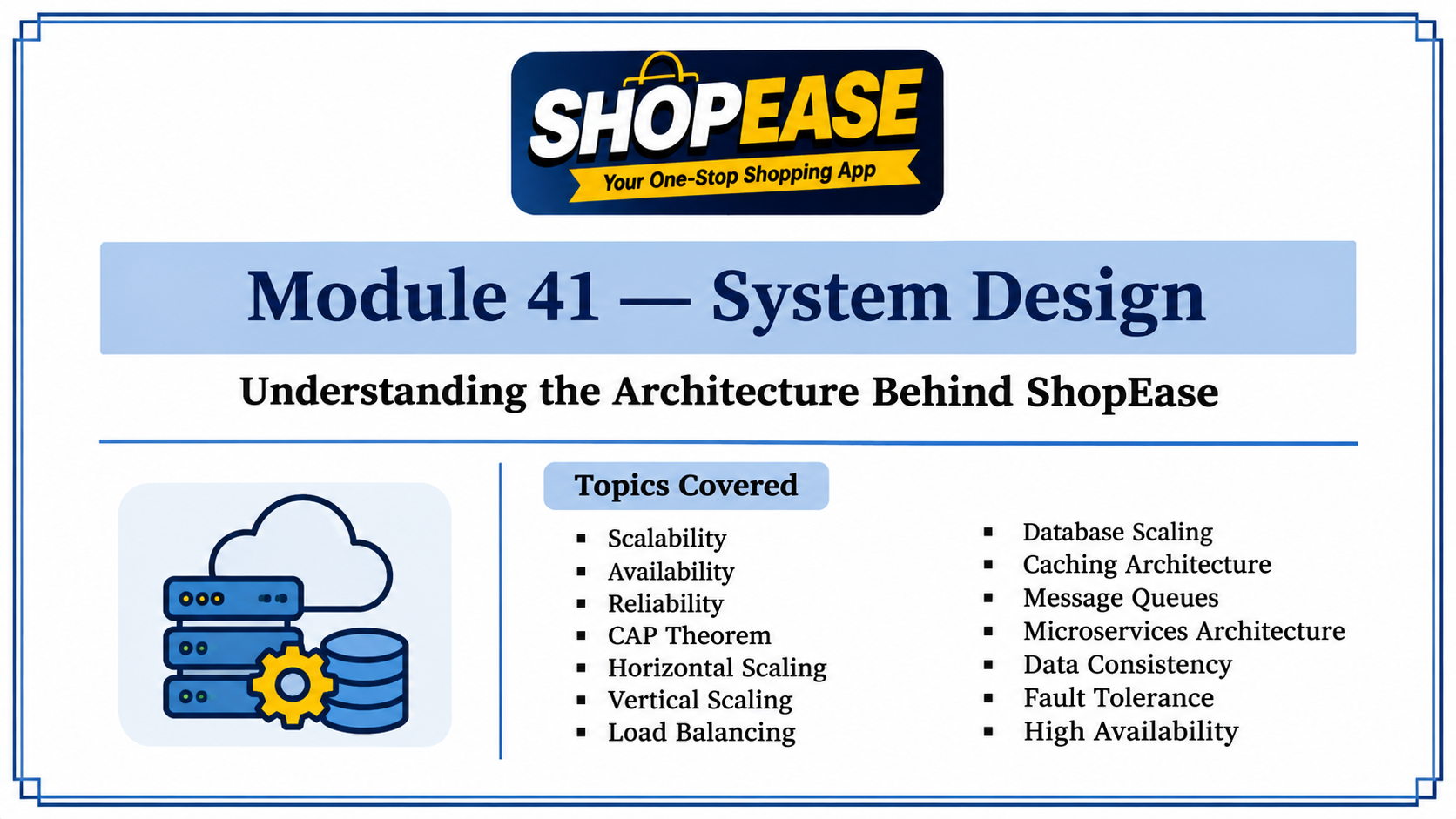
In Module 41 — System Design, I focused on understanding these architectural decisions through the ShopEase e-commerce backend.
- Scalability: Handling Application Growth
Scalability is the ability of a system to handle increasing workloads.
Two common approaches are:
Vertical Scaling: Increasing the resources of an existing server, such as CPU and RAM.
Horizontal Scaling: Adding more instances of an application to distribute incoming requests.
Understanding the difference helps in choosing an appropriate scaling strategy as application traffic grows.
- Availability and Reliability
Availability refers to whether a system is accessible when users need it.
Reliability focuses on whether the system continues to perform its intended operations correctly.
These are important considerations for e-commerce applications, where failures in order processing, payments, or inventory operations can affect users.
- CAP Theorem and Data Consistency
The CAP theorem describes the trade-offs between Consistency, Availability, and Partition Tolerance in distributed data systems.
I explored how these concepts influence architectural decisions, particularly when multiple services and databases are involved.
Data consistency is especially important in operations such as order placement, inventory updates, and payment processing.
- Load Balancing and Database Scaling
Load balancing distributes incoming requests across multiple application instances.
Database scaling focuses on handling growing data volumes and query workloads.
These concepts help explain how backend systems can manage increasing traffic without placing all the workload on a single application instance or database.
- Caching Architecture
Caching helps reduce repeated database queries by temporarily storing frequently accessed data.
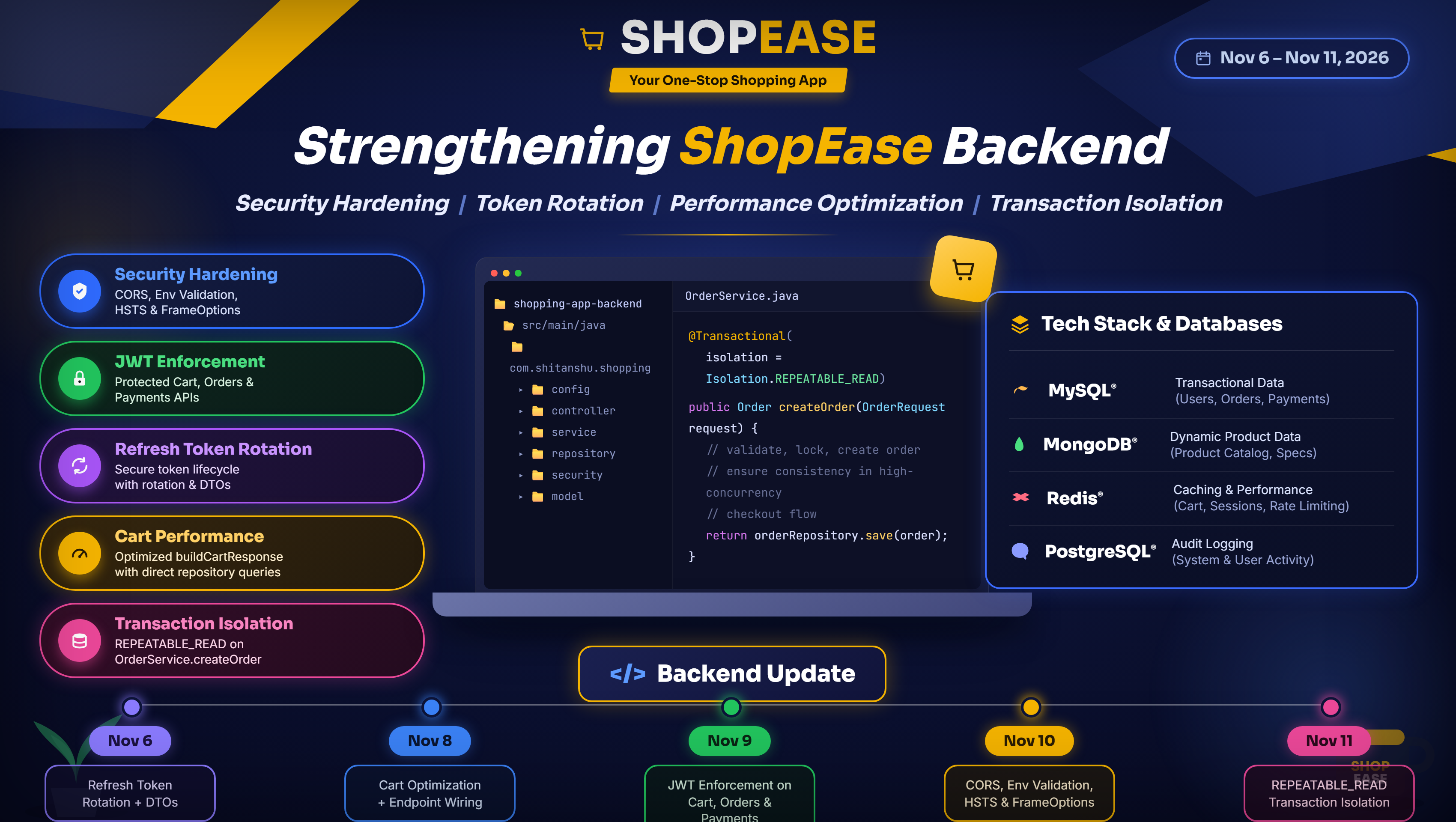
In ShopEase, Redis is part of the backend architecture. Understanding caching at the system-design level helped connect cache usage with response time, database workload, and cache consistency.
- Message Queues and Microservices Architecture
Microservices divide an application into smaller services with specific responsibilities.
Message queues support asynchronous communication between services.
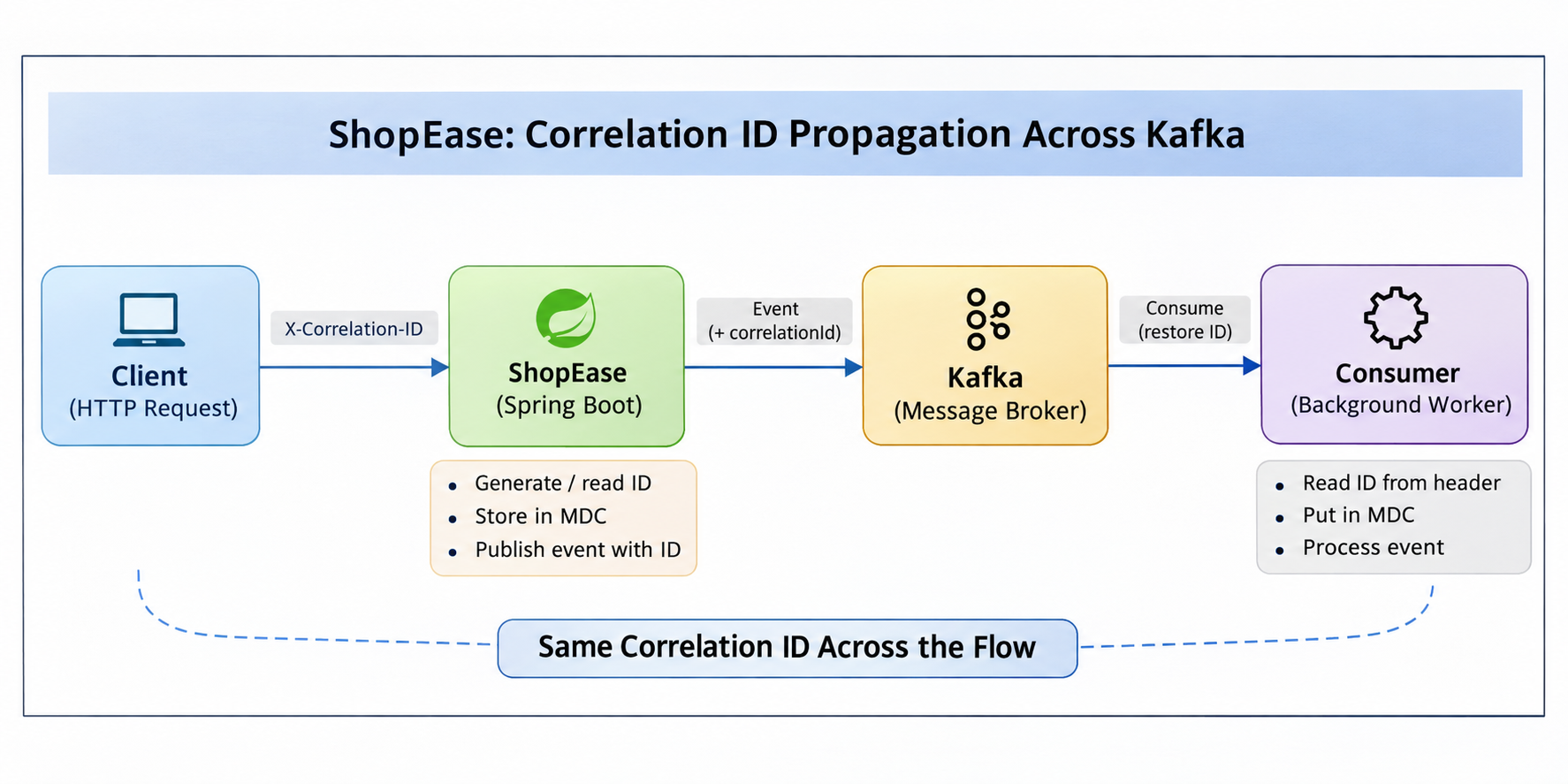
In ShopEase, Apache Kafka is used as part of the event-driven architecture. This provides a practical context for understanding asynchronous communication and service coordination.
- Fault Tolerance and High Availability
Fault tolerance focuses on how a system handles component failures.
High availability aims to minimize service interruptions.
I studied these concepts to understand the architectural approaches used to reduce the impact of failures in distributed applications.
Key Learnings
Module 41 helped connect backend development with broader system-design concepts:
Scalability: Vertical and horizontal scaling.
Availability and reliability.
CAP theorem and distributed data consistency.
Load balancing and database scaling.
Redis-based caching architecture.
Kafka and asynchronous messaging.
Microservices communication.
Fault tolerance and high availability.
Conclusion
System design is about understanding the decisions behind an application's architecture, not simply adding more technologies.
Through ShopEase, I am connecting concepts such as caching, microservices, databases, and messaging with the architectural challenges that appear as an application grows.
Module 41 marks an important step in understanding not just how to build backend systems, but also how to think about their architecture.
Project: ShopEase — Full-Stack E-Commerce Application
GitHub Repositories:
Backend: https://github.com/Shitanshu686/shopping-app-backend
Frontend: https://github.com/Shitanshu686/shopping-app
#Java #SpringBoot #SystemDesign #Microservices #BackendDevelopment
About the author
- 🎓 BCA Student 💻 Learning Data Structures & Algorithms in C and Java ☕ Interested in Java Development and Backend Development 🚀 Building projects and improving problem-solving skills Prepare for Software Engineer roles
Comments
Join the discussionNo comments yet. Be the first to comment.